

The idea of happiness often revolves around having wealth, luxury, or contemporary convenience. But it has a broader essence. And, the little South Asian, Himalayan nation of Bhutan is one of the finest examples of it.
Did you know Bhutan is regarded as one of the happiest countries in the world despite being a developing country with a small GDP? This country has been surprising the world for years.
If you are planning to explore this country and its splendour, book your trip with a licensed Bhutan tour operatorfor exclusive experiences. So, what, therefore, distinguishes Bhutan?
Well, its own way of living holds the key to the solution. The nation of Bhutan measures success in a different way. This is in terms of people's well-being, environmental preservation, cultural preservation, & spiritual harmony.
This South Asian nation has developed a way of life that puts people's happiness ahead of material prosperity. Isn’t it incredible?
The Concept of Gross National Happiness/ GNH
Bhutan's well-known Gross National Happiness (GNH) concept is the main factor contributing to its happiness. Bhutan feels that genuine growth should enhance the happiness and standard of living of its people, which is definitely unique.
During the mid-1970s, Jigme Singye Wangchuck popularized the idea that GDP is not as important as Gross National Happiness. And, the country's growth goals and policies were revolutionized by this idea.
The Four Pillars of GNH
Four main aspects support Bhutan's Gross National Happiness:
- Equitable & sustainable socioeconomic growth
- Preservation of the environment
- Maintaining & advancing culture
- Effective governance
These pillars of the GNH concept guarantee that people's mental tranquillity and traditional values are not troubled by modernization.
Strong Connection with Nature
Bhutan's profound reverence for the natural world is among its loveliest features, and it has a carbon-negative footprint.
One of the very few carbon-negative nations in the world is Bhutan, and this is the first one. This shows that the nation takes in more carbon dioxide than it emits.
The government here mandates that at least 60% of Bhutan's land always be covered by forests, which encompass more than 70% of the country. Cleaner air, healthier living circumstances, and a general sense of peace are produced by this dedication to environmental protection.
All of this increases pleasure in general.
Calm Natural Setting
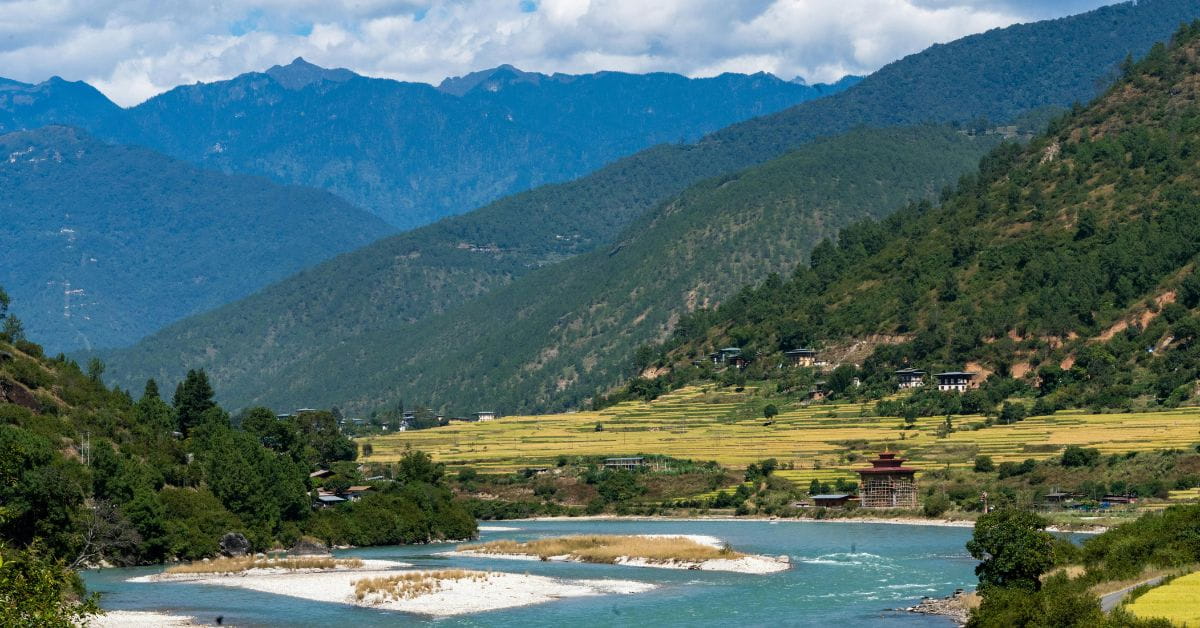
The stunning valleys, rivers, mountains, and forests create a serene and stress-free atmosphere in Bhutan.Here, Bhutan offers a calmer pace of life than always busy, noisy, and polluted cities. Living near nature is beneficial to many people's mental and emotional health, and tourists love this fact.
Spending time in nature lowers stress, anxiety, and emotional lows, and there’s no doubt about it, according to several scientific studies conducted worldwide. This is naturally incorporated into daily life in Bhutan.
Strong Buddhist & Spiritual Principles
Vajrayana Buddhism has a major impact on their culture, customs, and way of thinking.You should know that in Bhutan, spirituality is not confined to temples or ceremonies; it is a part of daily existence.
Put Inner Peace First
Bhutanese culture promotes:
- Simplicity, gratitude, mindfulness, & compassion
- Less materialism
Relationships, kindness, and inner tranquillity are taught to be more important than wealth or social standing, which is extremely beautiful and practical.
No doubt, this way of thinking lessens social pressure and unhealthy competition, which are frequent sources of stress in many contemporary societies.
Meditation & Mental Well-Being
Spiritual rituals and meditation are very common in Bhutanese culture. These support natives in preserving their mental clarity along with emotional balance.
Happiness, according to many Bhutanese, derives from within rather than from material belongings. This kind of thinking is what everyone needs, which fosters a culture that prioritizes emotional well-being over materialism.
Preservation of Culture & Traditions
Sometimes, countries might lose their cultural identity as a result of globalization, but Bhutan has adopted an alternative strategy.
Bhutanese customs, language, attire, festivals, and architecture are all actively preserved by the government.
Cultural Pride & National Clothes
Traditional attire is often worn by citizens, and they look absolutely beautiful:
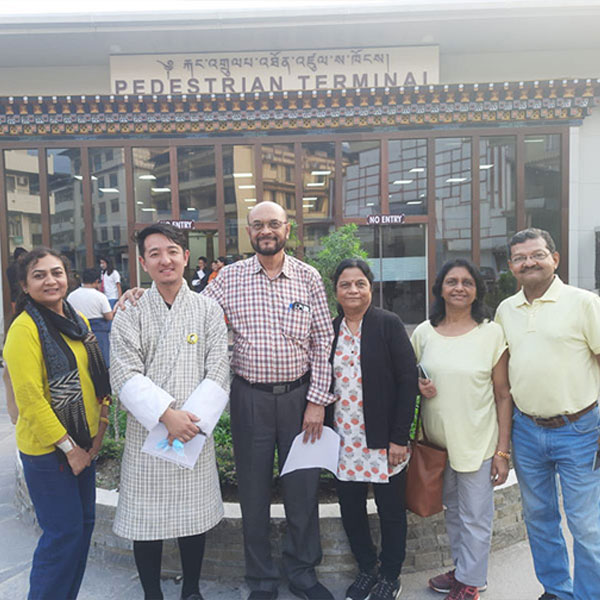
- This is Kira for women, while Gho is for men
This enhances national cohesion and cultural identity.
Festivals Unite Communities
Tshechus, Bhutan's vibrant religious celebrations, are observed nationwide, and among these celebrations are:
- Customary dances
- Musical performances
- Spiritual rituals
- Community meetings
They foster solid interpersonal ties and group happiness, no doubt. Also, natives here feel relatively more emotionally secure and like they belong when they are a part of their tradition and community.
Low Crime & Peaceful Society
Bhutan is regarded as one of the world's safest nations, and communities are interconnected. Plus, crime rates are comparatively low here.
High Levels of Social Trust
In Bhutan, most individuals have faith in their local communities and neighbours, and a key aspect of national happiness is certainly social trust.
As we all know about it, social isolation or loneliness has become a major problem in many nations, but Bhutan's community-focused way of life helps fight this issue.
Less Material Competition
Luxury, riches, and social comparison are not extremely important in Bhutanese society. Here, natives feel less pressure to continuously compete with others as a result.
Thus, stress levels drop, and general life satisfaction rises as a result.
Healthcare & Education
Bhutan offers its residents free basic healthcare and education up to 10th standard.
Healthcare Accessibility
Even in isolated places in Bhutan, healthcare services are accessible, and as per the government, happiness depends on both mental and physical well-being.
Therefore, natives who have access to healthcare feel more secure and experience less financial stress.
Values-based Education
In addition to intellectual instruction, Bhutan's educational system fosters moral & emotional growth.
Here, students are urged to:
- Honor the natural world
- Be kind to others
- Maintain culture
This well-rounded educational system is highly effective and contributes to the development of emotionally stable and responsible citizens.
Controlled Tourism Policy
Bhutan has a distinctive tourist policy- “High Value, Low Volume Tourism.”
The country restricts the number of visitors in order to preserve its nature and culture, rather than permitting mass tourism.
Why Is This Important?
Many remarkable tourist locations suffer from:
- Pollution
- Overcrowding
- Cultural harm
- Rising locals' stress levels
By carefully controlling tourism, any nation can avoid these problems.
Simple Lifestyle & Minimalism
A sustainable development fee/ charge paid by tourists/ visitors goes toward infrastructure, healthcare, and education in Bhutan.Bhutan can gain economically from this strategy without compromising the happiness of the nation. Your Bhutan tour operator will guide you thoroughly about the charges and rules.
Decreased Stress Levels
Living a simpler lifestyle typically means:
- Reduced debt
- Reduced pressure at work
- More time spent with family
- Improved balance between work and life
This thing supports the emotional well-being of the natives.
The Country’s Policies Focused on Well-Being
Yes, when formulating national policy, Bhutan's government carefully considers the satisfaction of its inhabitants. Here are a few examples:
GNH-Based Policy Screening. Bhutan assesses if big projects or policies would increase national happiness before they finally approve them.
This involves analysing effects on:
- Environment
- Mental well-being
- Social harmony, culture, and community life
Happiness is seldom used as a formal policy metric in the nation.
Good Governance
Well, Bhutan has strived for societal stability and democratic governance. Public institutions are often highly trusted by natives/ citizens. This enhances national contentment.
Value of Community & Family
Based on data, in many nations, loneliness and isolation have increased due to modern lifestyles.
However, Bhutan continues to have close ties to its families and communities.
Joint Responsibilities
Communities frequently collaborate during:
- Celebrations Farming
- Religious gatherings
- Building projects
Social cohesion with emotional support networks makes it stronger.
Emotional Security
Strong familial ties lessen feelings of loneliness, which offer emotional stability. Healthy relationships are among the best signs of happiness, and naturally, Bhutan places a high value on these relationships.
Work-Life Balance in Bhutan
In general, Bhutanese people lead calmer, less stressful lives, and many folks continue to maintain a healthy work-life balance despite the rise in modernity.
Reduced Culture of Hustle
Bhutan encourages a balanced life, in contrast to highly competitive economies where people more often experience burnout.
People schedule time for:
- Family prayer, neighbourhood gatherings, & leisure time in nature.
As a result, mental and emotional health here improves.
Honouring Mental Health
Bhutan acknowledges the close relationship between mental health & happiness, and the nation supports emotional balance by:
- Spiritual activities
- Support from the community, mindfulness, & cultural customs
Bhutan incorporates emotional well-being throughout society as a whole.
Issues Bhutan Continues to Face
We have to understand that Bhutan is not a flawless country, despite being referred to as the happiest nation in the world.
Bhutan has difficulties, much like any other nation, and better employment options are sought by many young people. This is particularly true as globalization grows.
Traditional lives are gradually shifting as cities expand.
Here's What the World Should Learn from Bhutan
Other nations can learn a lot from Bhutan's ideology or culture:
Happiness Is More Important Than Just Wealth. Growth in the economy is vital, but it shouldn't come at the expense of family life, mental health, or the environment; that’s what we see in Bhutan.
Being in Nature Enhances Well-being. The quality of life is directly improved by preserving green areas, forests, and pure air, and Bhutan excels at that.
People Are Happier in Strong Communities. One of the biggest sources of happiness is human interaction.
Identity & Culture Are Important. Maintaining customs makes people feel proud and like they belong.
Balance in Life is Invaluable. Long-term happiness is frequently higher in balanced lives than in competitive ones.
Is Bhutan the Happiest Nation?
Because happiness is so fundamentally cultural and personal, it is challenging to quantify whether any country is actually the happiest one.
Bhutan is well-known throughout the world for its unique approach to the well-being of its people, though it doesn't always place first in worldwide happiness surveys.
We can say perfection is not what makes Bhutan unique, but its purpose does.The Land of Thunder Dragon, Bhutan, consciously centers national development around human happiness, environmental sustainability, and emotional well-being.
Final Words
Since it prioritizes people over profits and well-being over unrelenting economic progress, Bhutan becomes a prominent example of the happiest country.
A more tranquil and satisfying way of life is facilitated by its Gross National Happiness concept. This embraces strong cultural traditions, a spiritual lifestyle, environmental protection, and a community-centered society.
To explore all such beautiful aspects, plan your trip with a trusted Bhutan tour operator, and you might connect with RS Travelsas your reliable travel guide.